Native on iPhone first

Your day, planned
on your own device.

Daymark is a private, local-first task scheduler. You type what you need to do, it puts it on your calendar, and the plan never leaves your device. I'm rebuilding it as native apps on one shared Rust core, starting with iOS.

See the iOS app What's coming

A showcase by Joseph Cintron. The write-up and screenshots, not the full source.

The iOS app

SwiftUI on the Rust core. Screenshots from the latest iOS build (native 0.1.39).
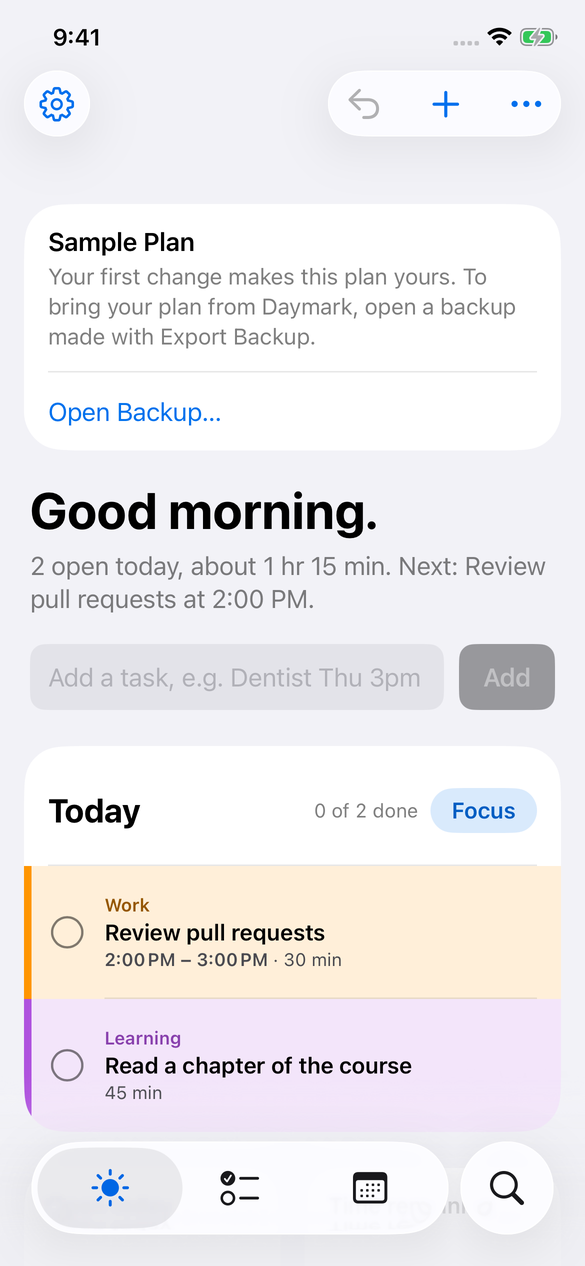
Daymark on iPhone: the Today screen with a greeting, quick add, and today's tasks
TodayWhat's left and what's next.
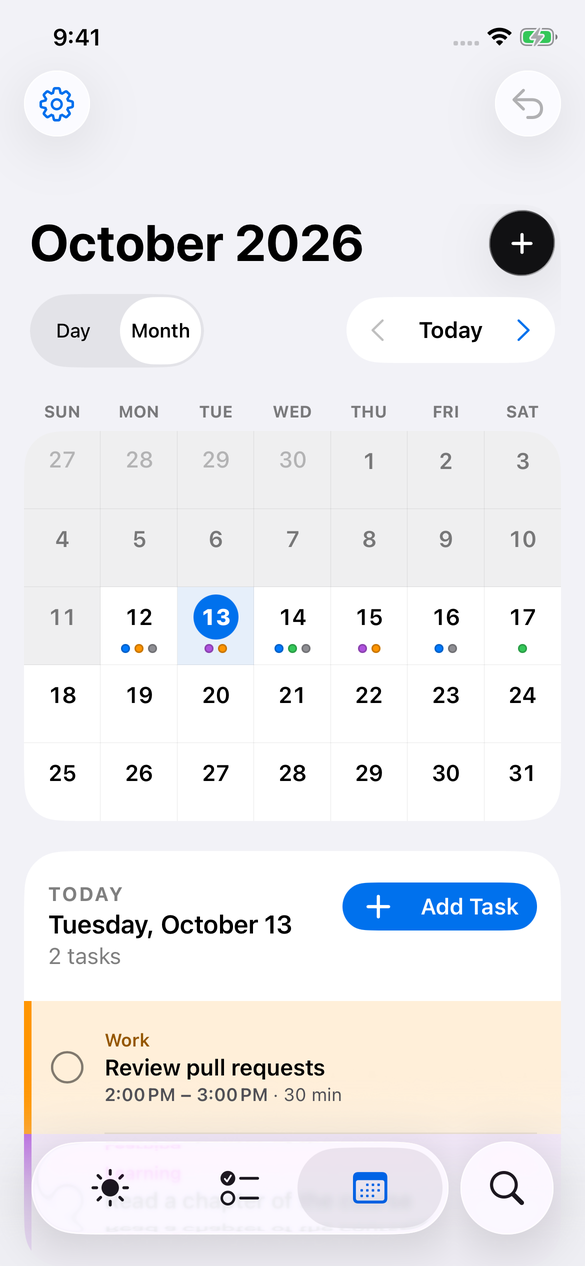
Daymark on iPhone: the month calendar with today's tasks below
CalendarMonth and day views.
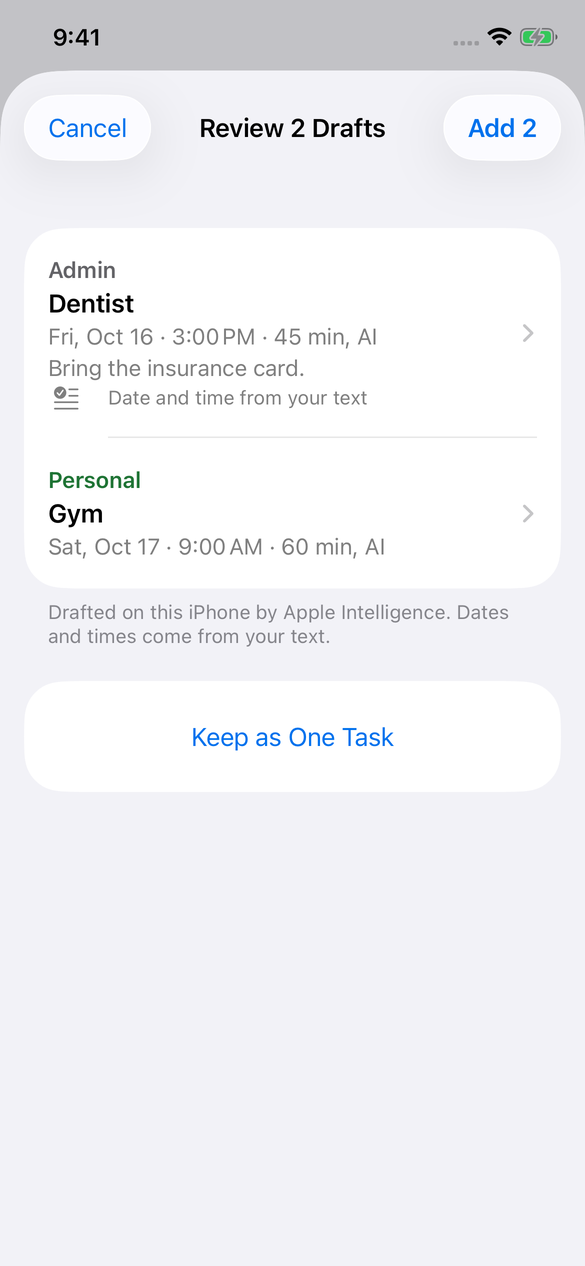
Daymark on iPhone: reviewing two tasks drafted by Apple Intelligence
Draft with AIDrafted on the phone, reviewed before it's added.
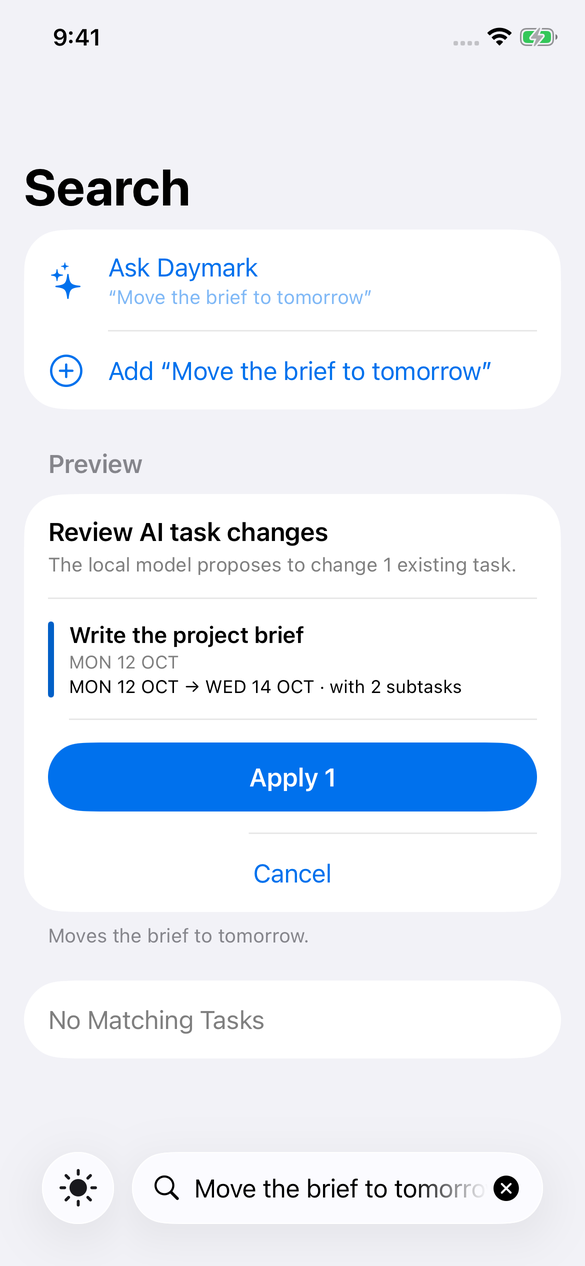
Daymark on iPhone: Ask Daymark previewing a proposed change
Ask DaymarkPlain-language changes, previewed first.
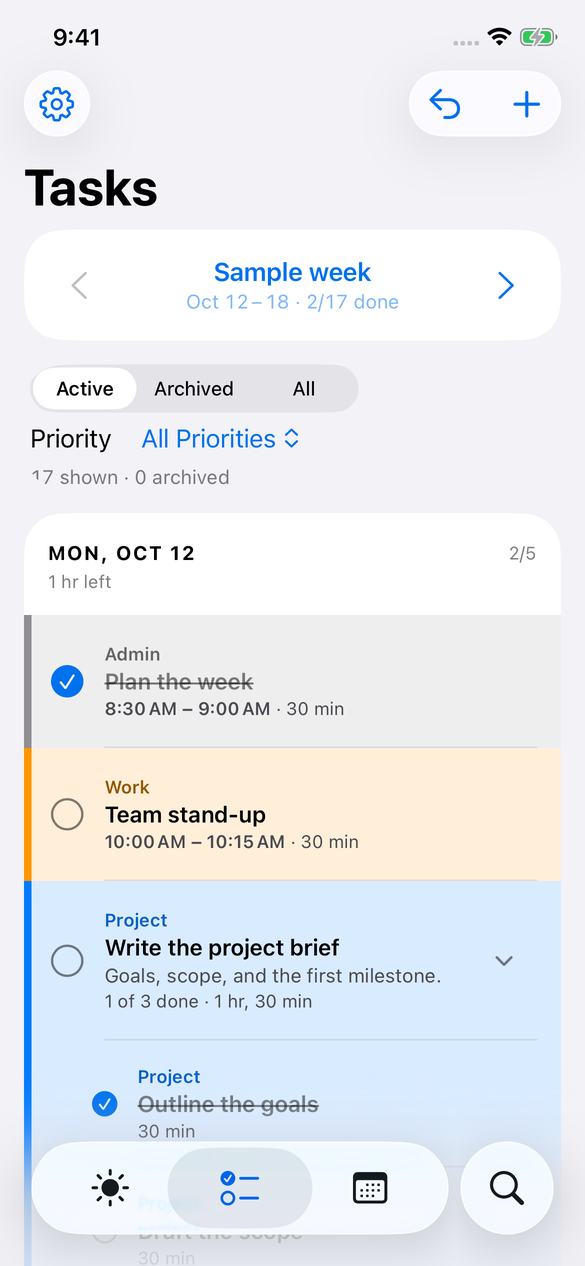
Daymark on iPhone: the Tasks list with subtasks
TasksSubtasks, filters, a week at a time.
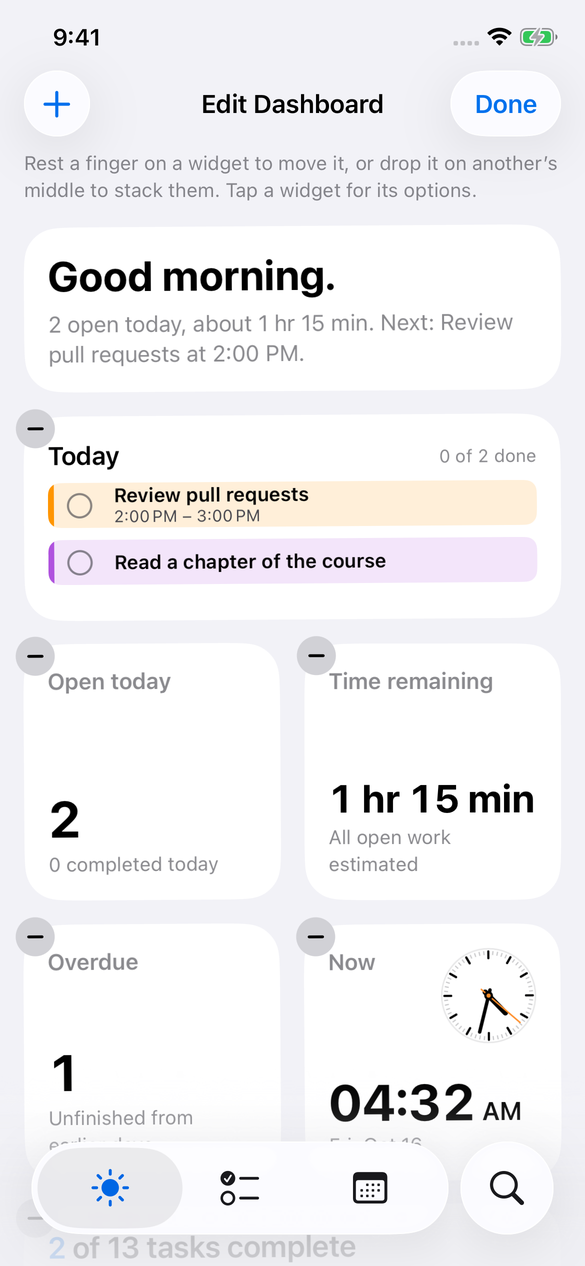
Daymark on iPhone: editing the dashboard widgets
Dashboard editingHold, drag, and stack like the Home Screen.
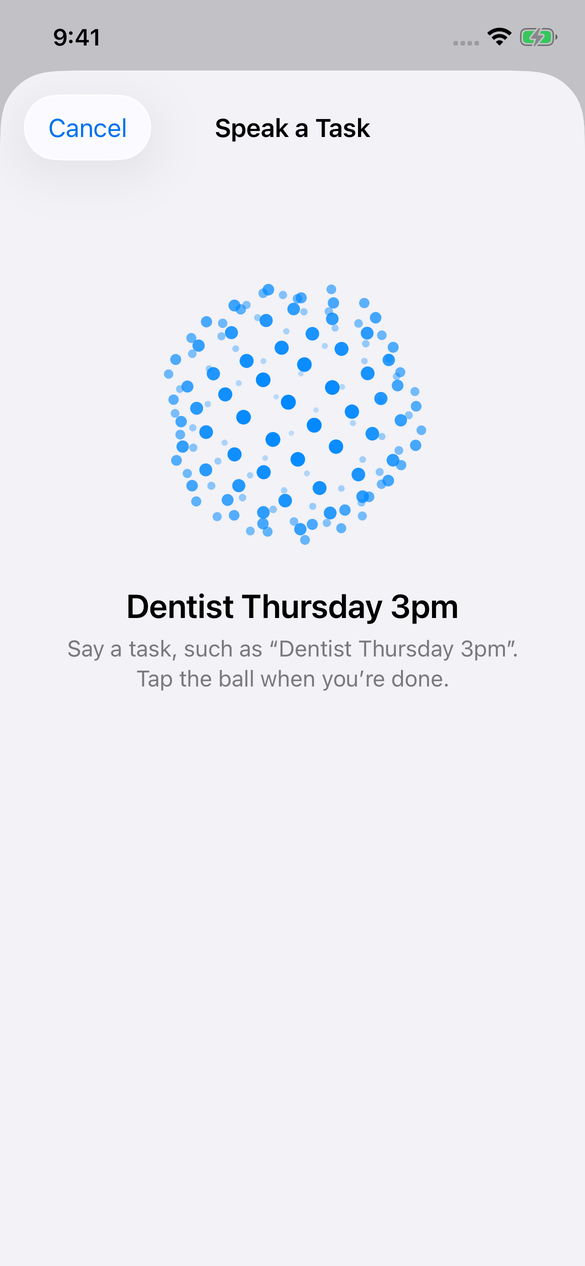
Daymark on iPhone: speaking a task
Speak a taskSay it, it reads the date and time.
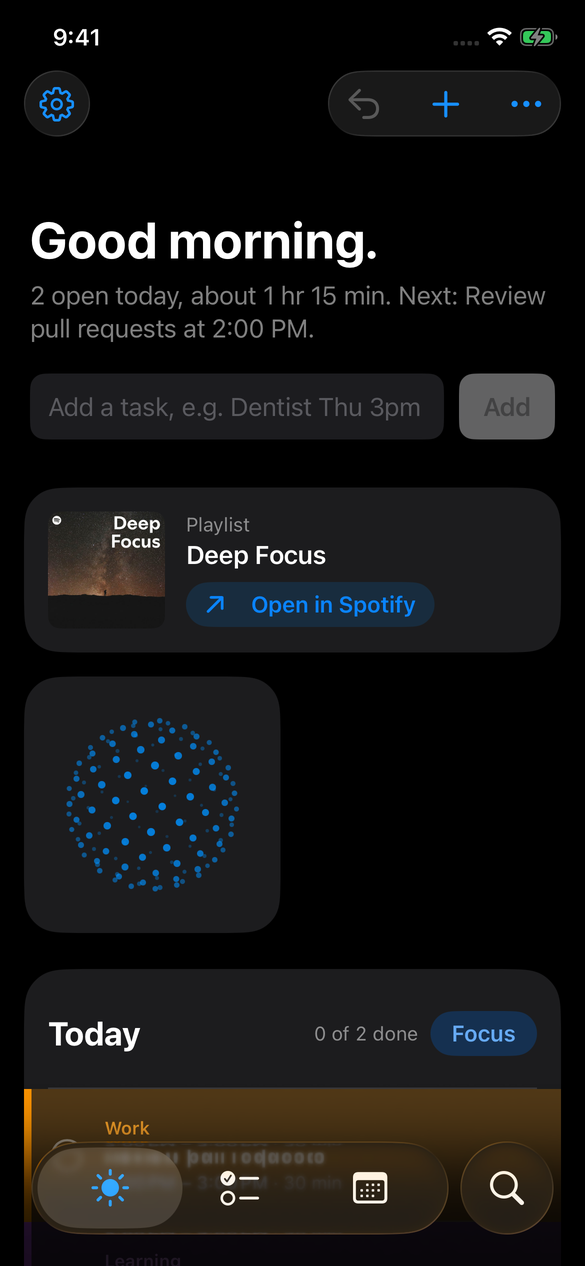
Daymark on iPhone in dark mode
Dark modeLight, dark, or system.

Every platform, one core

iOS is what I'm building now. Windows, macOS, Linux, and Android are coming. Until then the web app keeps shipping, packaged with Tauri on desktop.

PlatformNative appRuns today as
iPhone, iPadIn progress SwiftUINative build
macOSComing soon SwiftUI Mac targetWeb app in Tauri
WindowsComing soon C# and WinUI 3Web app in Tauri
LinuxComing soon Rust and GTK4Web app in Tauri
AndroidComing soonWeb app in Capacitor
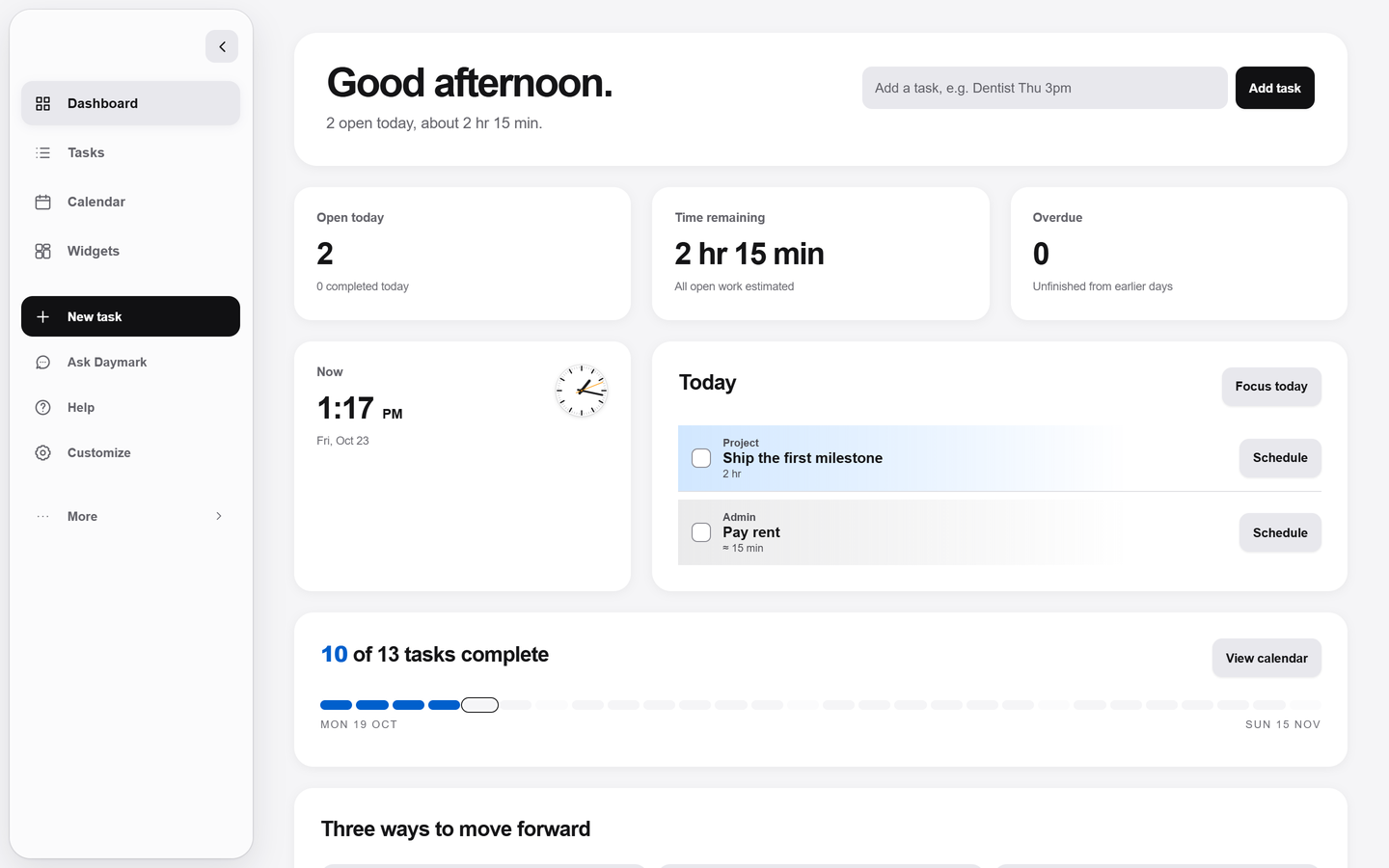
Daymark desktop dashboard with today's tasks, time remaining, and progress for the week
The current desktop app: the web app in a Tauri shell.

How it works

All the logic lives once, in Rust, and every app only writes its own interface and its own ML. That's how the apps stay consistent without writing everything five times.

One shared Rust corePlan format, operations and Undo, date reading, calendar, search, repeats, and estimates. Exposed to each app through UniFFI.
One way to change the planUI, voice, or AI, every change goes through the same validated operations. A failed change changes nothing.
On-device AIApple's on-device model on iPhone. AI is opt-in, its output is previewed, and its guesses stay marked as guesses.
Private by defaultNo account, no telemetry. One plan file that moves between every app unchanged.
Ask, don't guessIf you don't say when something happens, it asks. Ambiguous dates are left as typed.
Why nativeDirect access to on-device ML and the GPU: Core ML on Apple devices, Windows ML and DirectML on Windows.

About me

I'm Joseph Cintron, a CS senior at FIU with an AI/ML concentration. I design and build Daymark myself. Reach me through GitHub.

Read the write-up GitHub profile