Local-first day planning

A day has a
realistic number of minutes.

A local-first day-planner that turns a goal into a workable set of next actions — and lets you reshape the plan in plain language, entirely on your own machine.

How it works The ML methodology

A portfolio & product showcase by Joseph Cintron — what Daymark does and how I built it, not the full source.

AI proposes, the validator disposes

Every change — from the UI, a keyboard action, or a plain-language request — flows through one validated mutation path. Nothing edits your plan any other way.

1

Ask in plain language

"Move today's unfinished work to Friday" — interpreted by a local model on your own hardware.

2

Constrained command plan

The request becomes a fixed vocabulary of actions with hard caps — validated and shown as a preview first.

3

Capacity-aware apply

Durations and per-day capacity decide what fits; lower-priority work reschedules when a day is overcommitted.
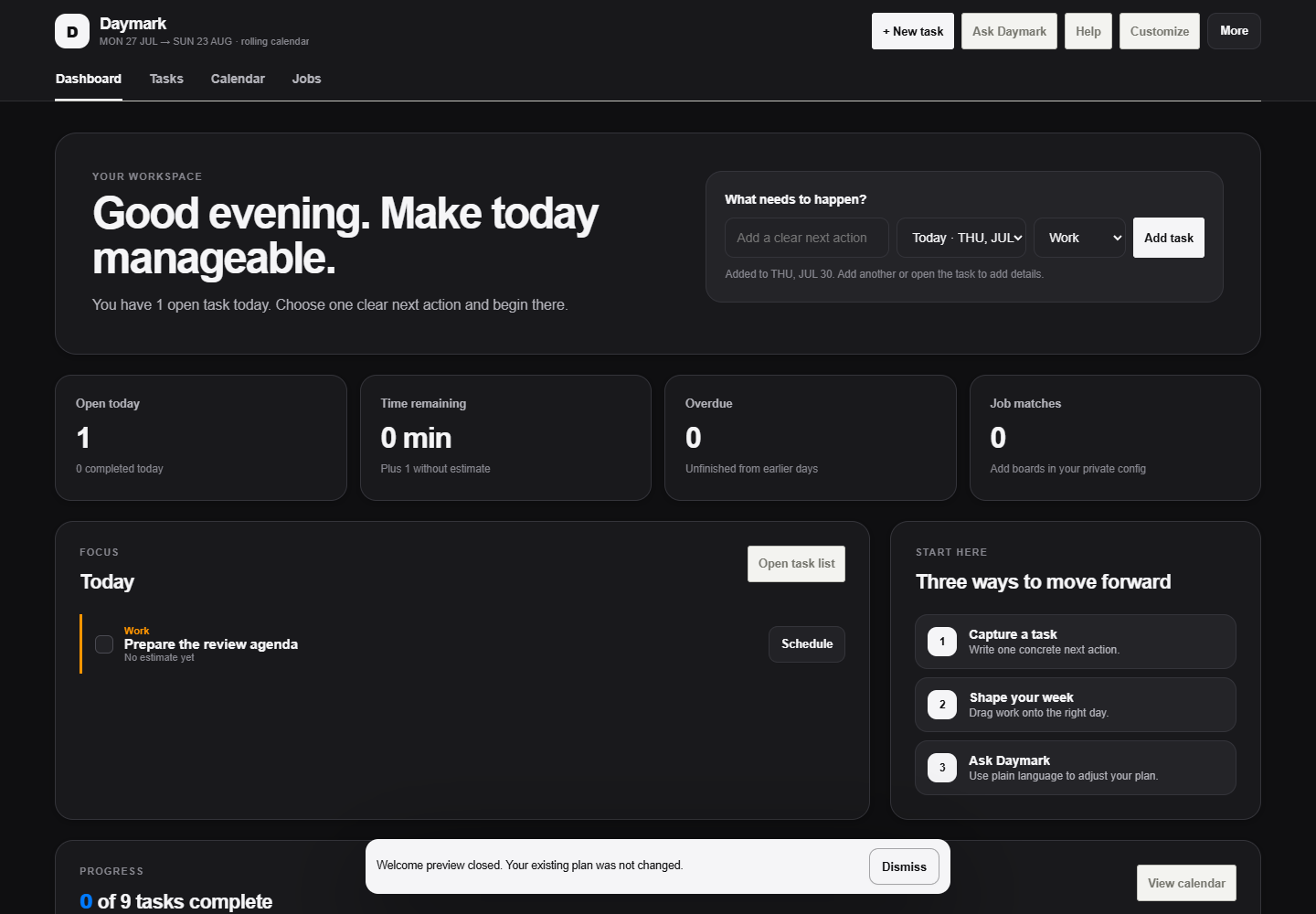
Daymark dashboard showing guided next actions, quick capture, and the day's workload
The dashboard: guided next actions, fast capture, and a day-meter that flags overcommitment.

What's inside

Capacity as a first-class ideaA day-meter tells you when you've quietly overcommitted, not just what's due.
Local, private AINatural-language planning via a local Ollama model — no account, no hosted API, no telemetry.
One validated mutation pathSingle operation layer validates every change and snapshots state for Undo.
Instrument-like UIDense, predictable controls with one consistent shell across desktop, tablet, and phone.
Revision-aware syncBrowser storage and an optional private folder reconcile by revision; conflicts ask, never overwrite.
Optional job radarA local job-scoring engine: cheap regex pre-filter then structured-JSON scoring by a local model.
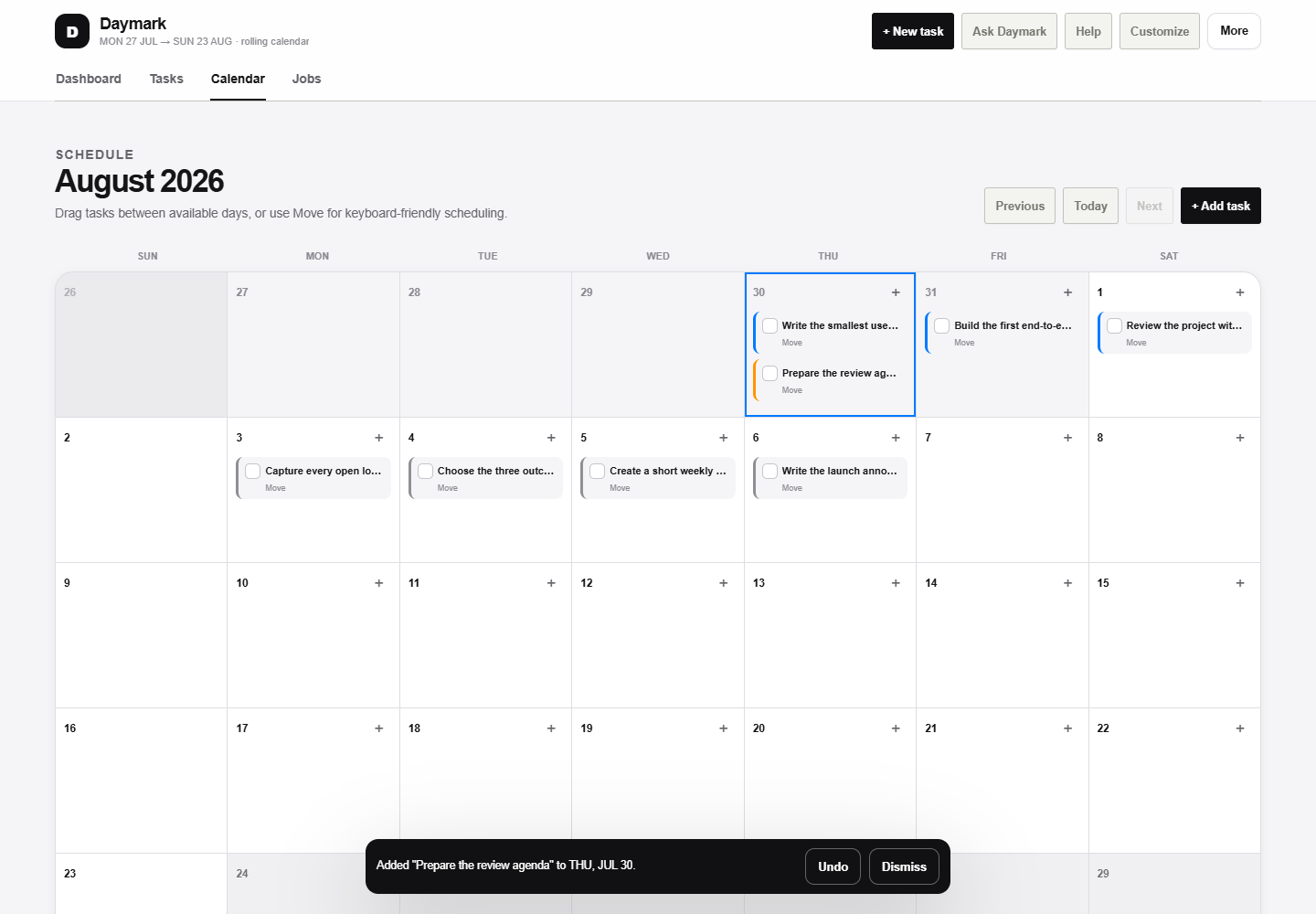
Daymark month calendar with drag scheduling and accessible move actions
Month calendar with drag scheduling; it folds into a readable agenda on small screens.

About & contact

I designed and built Daymark end to end — the validated mutation architecture, the local-model command layer, and the evaluation methodology behind the job engine. For research opportunities or a walkthrough, reach me via my GitHub profile.

Read the ML methodology GitHub profile